Hardwood floors are one of the most beautiful surfaces a home can have, but they are not static. Wood responds to its environment. It expands when it absorbs moisture and contracts when moisture leaves. That means humidity is not a minor maintenance footnote. It is one of the primary factors that determines whether your floor stays stable and beautiful or begins showing gaps, cupping, and movement over time.
In Littleton, this dynamic matters more than in most places. The Front Range climate is dry, the seasons shift hard, and indoor humidity can change faster than many homeowners realize. Protecting hardwood flooring in Littleton means thinking beyond the wood itself, and paying close attention to the air surrounding it.
Independent Floorings helps Littleton homeowners understand and manage exactly this challenge, both before installation and throughout the life of their floors.
How Humidity Actually Impacts Hardwood Floors
Humidity affects hardwood floors by changing the moisture content within the wood itself. When indoor humidity climbs too high, wood absorbs that moisture and expands, leading to cupping, crowning, lifting, or pressure building between boards. When humidity drops too low, wood dries out and shrinks, producing visible gaps, minor surface cracking, and a floor that looks noticeably more separated than it did on installation day.
In Littleton, low humidity is consistently the bigger concern. During winter months, heating systems run continuously, and that dry forced air pulls moisture out of the home aggressively. Hardwood floors are essentially trying to find equilibrium with the surrounding air, and when the air changes dramatically, the boards follow.
This is why experienced professionals focus so heavily on acclimation, moisture testing, and selecting the right species or construction type before a single board is installed. The goal is not to stop wood from moving, that is impossible. The goal is to reduce extreme movement so the floor performs predictably and lasts as long as it should. Stable indoor humidity is one of the most direct ways Littleton hardwood flooring stays beautiful and structurally sound over time.
What humidity is bad for hardwood floors?
Hardwood floors generally perform best when indoor relative humidity stays between 35% and 55%. Problems develop when humidity drifts consistently outside that range.
When humidity drops too low:
- Boards shrink and gaps open between planks
- Minor surface splitting or checking can develop
- Floors take on a dry, separated appearance
When humidity climbs too high:
- Boards swell and press against each other
- Cupping or crowning develops across the surface
- Finish stress increases and board movement accelerates
In Littleton, the low-humidity scenario, driven by extended heating seasons, is the condition that generates the most hardwood floor repair in Littleton calls each year.
Does Humidity Vary Between Floors in the Same House?
It does, and the difference can be meaningful. Lower levels and basements tend to hold more moisture because they sit closer to concrete and earth. Upper floors often run drier because heat rises and HVAC airflow can strip moisture from those spaces more aggressively.
For Littleton homeowners with hardwood on multiple levels, this means each floor may respond differently to seasonal changes. Independent Floorings accounts for these variations during in-home evaluations, because a one-size approach to humidity management does not reflect how homes actually behave.
What pulls moisture out of wood floors?
In Colorado, the primary culprits are consistent and worth knowing:
- Dry winter air coming off the mountains
- Forced-air heating systems running for months at a time
- Fireplaces drawing moisture out of the interior
- Low baseline indoor humidity across the season
- Inadequate acclimation before installation
Once the furnace runs regularly, indoor air dries quickly and wood begins releasing moisture into that air. That is when homeowners start noticing gaps that were not present when the floor was new, and when Littleton hardwood floor refinishing or repair conversations often begin.
What flooring does an interior designer say to avoid?
Most flooring professionals do not advise against hardwood, they advise against choosing the wrong product for the wrong environment. Common mismatches in Littleton include:
- Solid hardwood installed in moisture-prone basements or over concrete slabs
- Soft wood species in high-traffic households where dent resistance matters
- High-gloss dark finishes in homes where dust and light scratches will show constantly
- Budget products not suited for the dimensional stress of Colorado’s dry climate
For lower levels and concrete subfloors, engineered hardwood handles environmental variation better than solid wood and is frequently the stronger recommendation for Littleton hardwood flooring installations in those spaces.
How to Protect Your Hardwood Floors from Humidity Damage
A practical protection plan for hardwood flooring in Littleton typically includes these steps:
Keep indoor humidity stable. A whole-home humidifier during winter months prevents the extreme dryness that causes gaps and shrinkage. Avoiding dramatic swings in either direction is the primary goal.
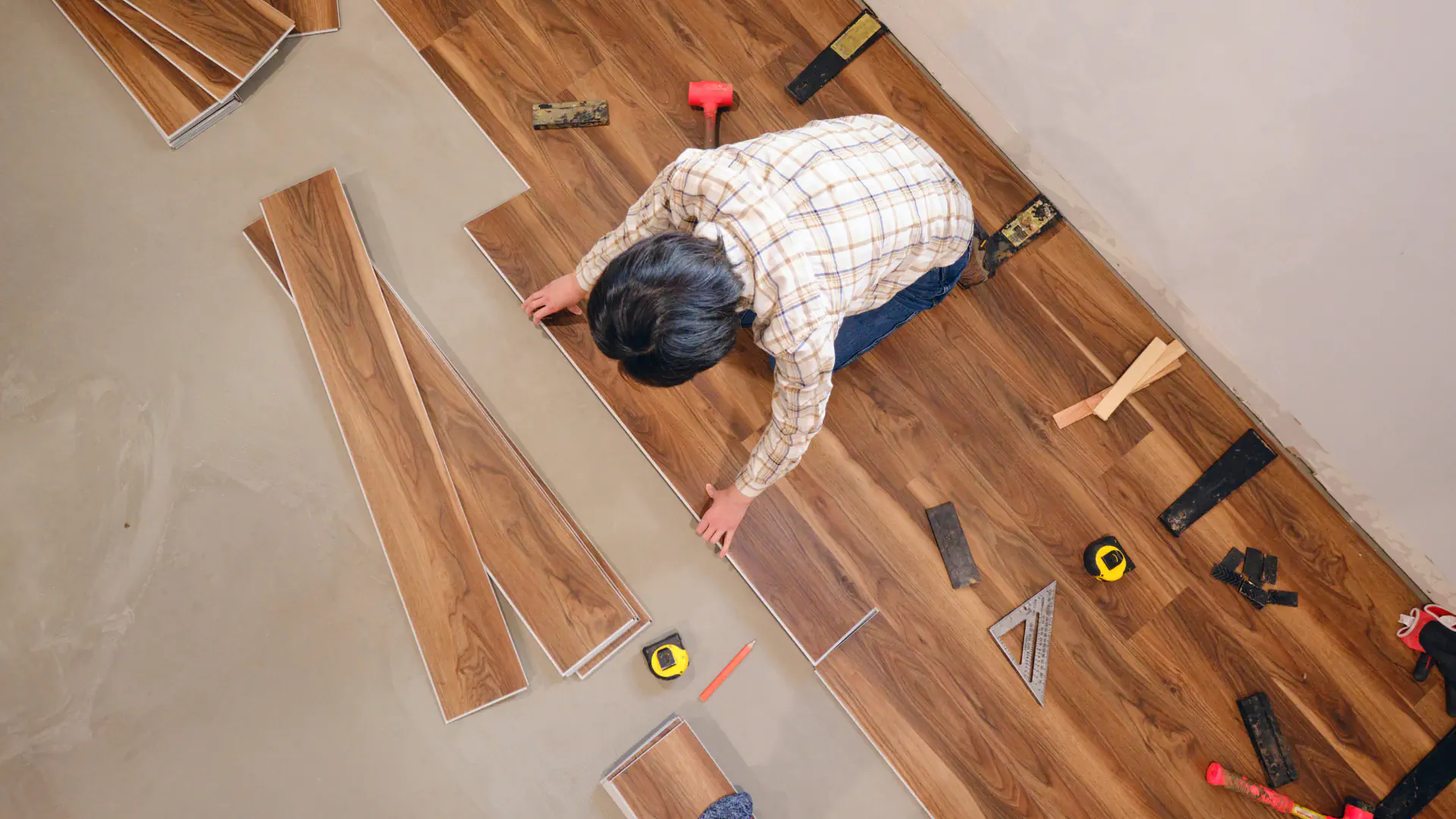
Allow proper acclimation before installation. Wood should spend enough time inside your home to adjust to local temperature and humidity conditions before installation begins. Skipping this step is one of the most common causes of early floor problems.
Choose the right product for the space. Some species and engineered constructions are significantly more stable than others under Colorado conditions. Independent Floorings helps Littleton homeowners match the right product to the right room.
Watch for early warning signs. Small seasonal gaps, slight cupping at board edges, or subtle surface movement are signals the floor is reacting before problems become costly. Catching these early often prevents the need for extensive hardwood floor repair in Littleton later.
Work with a local professional. Littleton’s climate is specific, and a local installer is far more likely to build that reality into the plan from the start.
Final Thoughts
If you are seeing gaps, cupping, or seasonal movement, or if you are planning a new Littleton hardwood flooring installation and want to get it right from the start, the most productive next step is a professional in-home evaluation.
Independent Floorings assesses moisture conditions, reviews your subfloor and HVAC setup, and recommends the right product and protection plan for your specific home. Whether the project calls for hardwood floor repair in Littleton, full Littleton hardwood floor refinishing, or a brand-new installation, the planning you do now protects your floor for years to come.
Contact Independent Floorings today to schedule your free in-home consultation.